Before the Beach Clubs: A Historic Walk Through Mykonos Old Town
Before the Beach Clubs: A Historic Walk Through Mykonos Old Town
Mykonos is usually introduced through its beaches, restaurants, villas and nightlife. But long before it became one of the Mediterranean’s most recognisable lifestyle destinations, the island had another identity shaped by the sea, religion, trade, traditional Cycladic life and people who became part of modern Greek history. Much of that story can still be found in Mykonos Old Town.
Between the harbour, the whitewashed lanes of Chora, Little Venice and the windmills are churches, museums, historic houses and monuments that reveal a very different side of the island. This is not a guide to seeing as many attractions as possible, but a way to walk through Mykonos and understand why the town looks, feels and exists the way it does today.
Mykonos Old Town Is More Than a Backdrop
Chora has become one of the most photographed places in Greece. White buildings, blue details, narrow streets and bougainvillea now form the background to everything from holiday photographs to international fashion campaigns.
But the town was not designed as a tourist attraction. Its streets grew around everyday island life, religion, maritime activity and the practical realities of living in the Cyclades. That history becomes easier to notice when you stop treating Mykonos Town as somewhere to pass through on the way to dinner.
A historic walking route through Chora can connect several of the island’s most important landmarks without ever leaving the town centre. And the right place to begin is with one of the people most closely associated with the island’s role in modern Greek history.
Start at Manto Mavrogenous Square
At the edge of Chora, close to the Old Port, stands the monument to Manto Mavrogenous, one of the most recognised female figures of the Greek War of Independence. Her connection to Mykonos goes far beyond having a square named after her.
Mavrogenous used a substantial part of her personal wealth to support the Greek revolutionary cause, financing ships and military activity during the struggle for independence. Mykonos remains one of the places most strongly associated with her revolutionary activity, and the central square and monument preserve that connection within the everyday life of the town.
It is easy to walk past the monument while heading into the maze of Chora. But stopping here changes the way the walk begins. The Mykonos story is suddenly not only about architecture or aesthetics; it is connected to the political and social history of modern Greece.
Step Further Back in Time at the Archaeological Museum of Mykonos
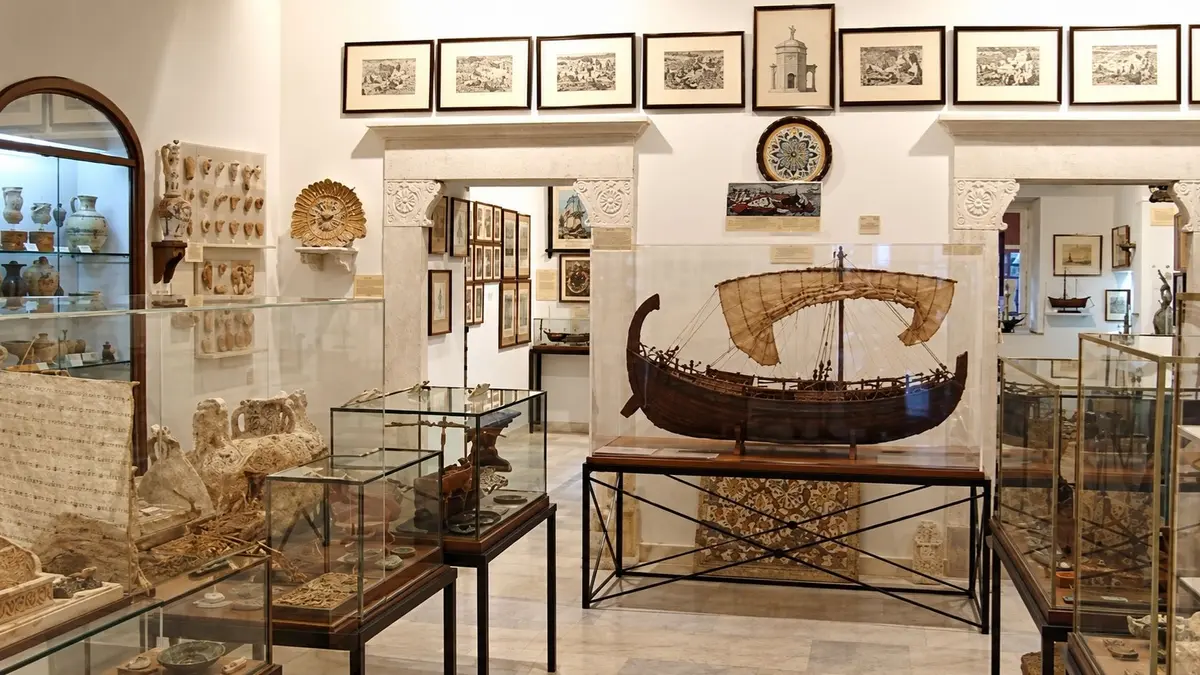
From modern Greek history, the next stop takes the story much further back. The Archaeological Museum of Mykonos was created to house important archaeological material connected not only to Mykonos, but also to the neighbouring islands of Delos and Rheneia.
Among the details worth knowing:
- Rheneia: the collection includes finds from the island, which served as the extensive necropolis of ancient Delos during Classical and Hellenistic times.
- Mykonos: archaeological finds from the island itself are also represented in the museum.
- The building: the museum is housed in a structure dating from 1905 that later acquired its present Cycladic character.
This makes the museum particularly interesting for anyone who wants to understand Mykonos in the context of the wider Cyclades. Delos may hold the region’s most internationally recognised ancient site, but the history of the surrounding islands is connected. Mykonos was never completely separate from what was happening around it, and for travellers planning a visit to Delos, the museum provides useful context before seeing the archaeological site itself.
Panagia Paraportiani: An Icon Built Over Time
Continue towards the Kastro area and one of the island’s most recognisable buildings gradually appears between the whitewashed streets.
Panagia Paraportiani is not simply one church.
It is an architectural complex formed by five churches, four on the lower level and another above them. Construction developed across different periods, with work beginning during the 16th and 17th centuries.
Its name is connected to its position beside the small side entrance, or paraporti, of the medieval fortifications of Mykonos.
That history helps explain its unusual appearance.
Rather than looking perfectly symmetrical or formally designed, Paraportiani feels almost sculpted by time. Different structures appear to have grown into one another, creating the irregular white form that has become one of Mykonos’ most photographed landmarks.
Today it is easy to see it purely as an aesthetic symbol of the Cyclades.
Knowing its history makes it something more.
It becomes evidence of how religion, architecture and the changing structure of the old town developed together over centuries.
Little Venice Was Once About the Sea, Not the Sunset
A few steps away, the historic character of Mykonos becomes more closely connected to its maritime past.
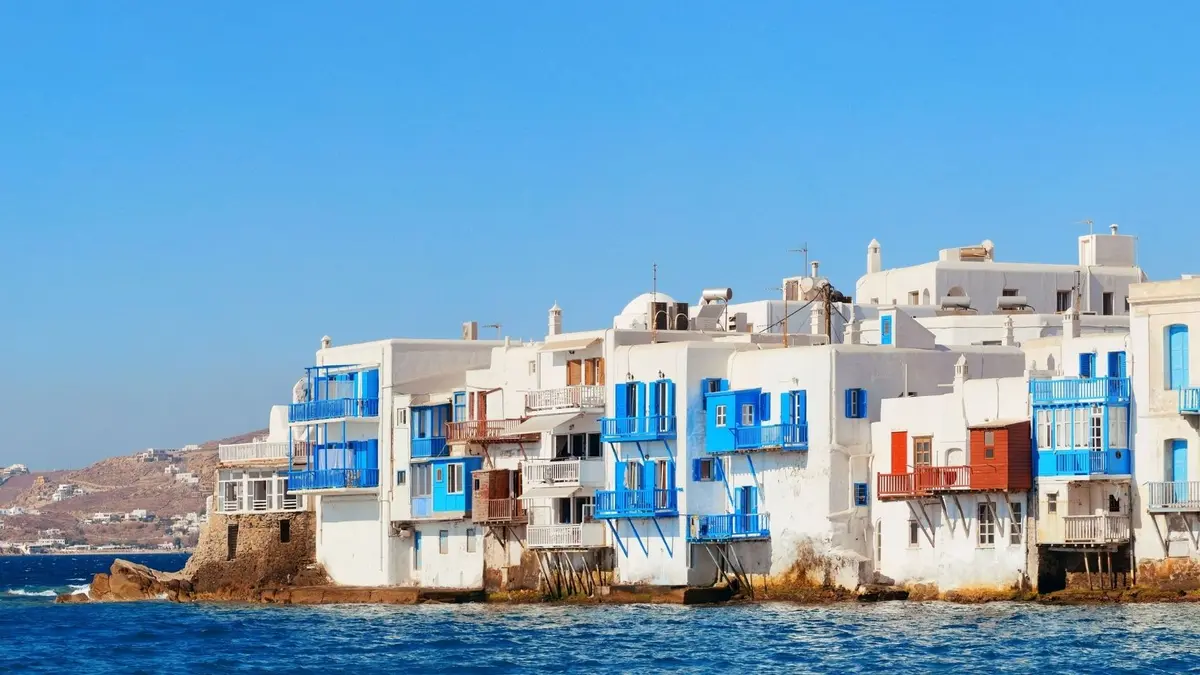
Today, Little Venice is best known for sunset drinks and photographs of colourful balconies hanging above the Aegean.
Historically, however, these buildings tell another story.
The waterfront neighbourhood developed between the medieval period and the 18th century, with houses associated with seamen, merchants and captains. Their distinctive projecting wooden balconies and position directly beside the sea are now part of one of the island’s most famous views.
That changes the way you look at Little Venice.
What appears today to be one of Mykonos’ most romantic locations was closely connected to a community whose lives and livelihoods depended on the sea.
And that relationship between Mykonos and the Aegean continues throughout the historic centre.
The Windmills Were Working Buildings Before They Became Icons
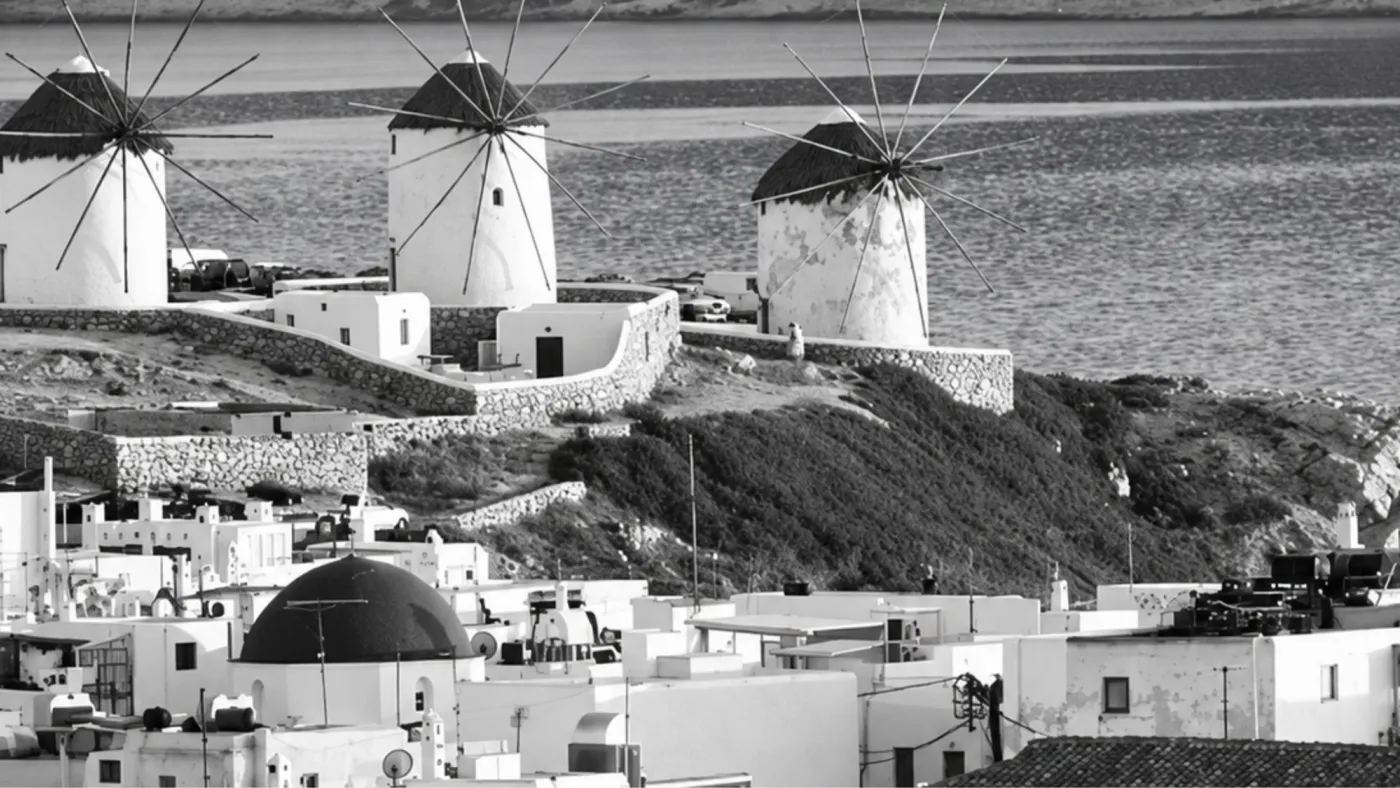
Above Little Venice stand the Windmills of Mykonos, one of the island’s most recognisable landmarks. Yet their original purpose was entirely practical. Windmills existed across the Cyclades because the islands could make use of one of their most abundant natural resources: wind. According to the Municipality of Mykonos, 28 windmills were operating on the island from the late 18th century into the 19th century, playing an important role in grinding grain and supporting commercial activity linked to cereals.
Their position was therefore not accidental. The same strong winds that visitors instantly associate with Mykonos were once an economic resource. That is one of the most interesting details about the windmills: something now photographed almost entirely for its beauty originally existed because it worked, helping the island turn its challenging natural conditions into something useful.
Understand the Island Through Its Maritime History
From the windmills, walking back into the lanes of Chora leads towards Tria Pigadia and the Aegean Maritime Museum.
If Little Venice hints at Mykonos’ relationship with the sea, the museum puts that relationship into a much wider context.
Operating since 1985, the museum is dedicated to researching and presenting Greek maritime history and the relationship between Greece and the sea from antiquity to the modern period. It is housed inside a traditional 19th-century Cycladic residence in the historic centre of Mykonos.
Inside are ship models, historical maritime documents, maps, engravings, antiquities and a notable collection of ancient coins featuring maritime imagery.
The garden continues the story with maritime instruments and the original mechanism of the Armenistis Lighthouse.
For visitors who know Mykonos mainly as a modern international destination, this is one of the places that can completely change their perspective.
The sea was not simply scenery.
For generations of island communities, it represented work, transport, communication, trade, danger and opportunity.
Why This Side of Mykonos Is Easy to Miss
The modern Mykonos experience moves quickly. There is always another beach, lunch reservation, sunset, dinner or night out competing for attention. That rhythm is part of what makes the island exciting, but it also makes it surprisingly easy to visit Mykonos several times without learning very much about the place itself.
The historic centre rewards a different pace. You begin noticing why buildings face particular directions, why the windmills stand where they do, how closely the town developed around the sea and how religion appears throughout the urban landscape. Even locations you may already know begin to look different: Little Venice becomes part of a maritime story, the windmills become infrastructure, Paraportiani becomes centuries of architecture layered together, and Chora stops being simply beautiful. It becomes legible.
Culture Does Not Need an Entire Day
Exploring historic Mykonos does not mean replacing the experiences people come to the island for.
It can simply become part of the day.
A morning walk through Chora can lead into lunch. A museum visit can happen before the beach. A private cultural tour can end at Little Venice before sunset.
The point is not to create another tightly scheduled itinerary.
It is to add context to somewhere you are already going.
Because understanding a destination can change the way you experience it.
The sunset may still be the same.
You simply know more about what you are looking at.
Who Will Enjoy a Historic Mykonos Walking Tour?
This side of Mykonos is particularly worth exploring if you want something beyond the island’s most familiar lifestyle experiences.
It works especially well for first-time visitors who want context before exploring the rest of the island, returning travellers who have already experienced the beaches and nightlife, couples looking for a slower morning in Chora, families interested in culture and history, travellers planning a Delos visit, and anyone who wants to understand the island rather than simply photograph it.
And because many of these landmarks sit within the historic centre, they can naturally become part of a wider day in Mykonos rather than requiring a completely separate itinerary.
How THE LOBBY Can Add Culture to Your Mykonos Plans
Mykonos does not have to be experienced through one version of the island.
A day can move between culture, the sea, dining and nightlife without any of them feeling out of place.
Through THE LOBBY, travellers can incorporate private experiences and curated activities into the wider rhythm of their stay, alongside restaurants, transport, yachts, villas and other requests.
That can mean exploring historic Chora with local context rather than simply following a map, combining cultural stops with another part of the day, or building a Mykonos itinerary that includes something beyond the places everyone already knows.
Because insider knowledge is not only about knowing where to get the table.
Sometimes it is knowing the story behind the street you walked down to reach it.
Key Takeaways
Mykonos Old Town contains layers of history that are easy to overlook when the island is experienced only through beaches, restaurants and nightlife.
Manto Mavrogenous connects Mykonos to the Greek War of Independence. The Archaeological Museum places the island within the ancient history of Delos and Rheneia. Panagia Paraportiani reflects centuries of religious and architectural development, while Little Venice and the Aegean Maritime Museum reveal how deeply local life was connected to the sea.
The windmills show how Mykonos once turned its famous winds into a practical economic resource, and Lena’s House offers something equally important: a view of everyday Mykonian life in the 19th century.
Together, these places reveal an island with considerably more history behind its international image.
Frequently Asked Questions
Final Thoughts
There are two ways to walk through Mykonos Town.
You can notice the white walls, the blue doors, the sea views and the places you recognise from photographs.
Or you can begin to see what sits behind them.
- A revolutionary remembered beside the harbour.
- A church built gradually beside a medieval gate.
- Houses shaped by families whose lives depended on the sea.
- Windmills that once worked instead of posing for photographs.
- A home preserved closely enough to imagine the people who lived inside it.
None of this makes modern Mykonos less interesting.
It makes the island more complete.
Because before Mykonos became known for beach clubs, villas, international restaurants and nightlife, generations of people had already built lives here around the wind, the sea, faith, trade and the wider history of the Cyclades.
You just have to slow down enough to notice.
Discover the Mykonos Behind the Obvious
The best-known side of Mykonos is easy to find.
The more interesting details sometimes need someone to show you where to look.
From cultural experiences and private tours to dining, yachts, transport, villas and bespoke island plans, discover a more considered side of Mykonos through THE LOBBY.